Blog

The History of the MAZDA MX-5 Miata

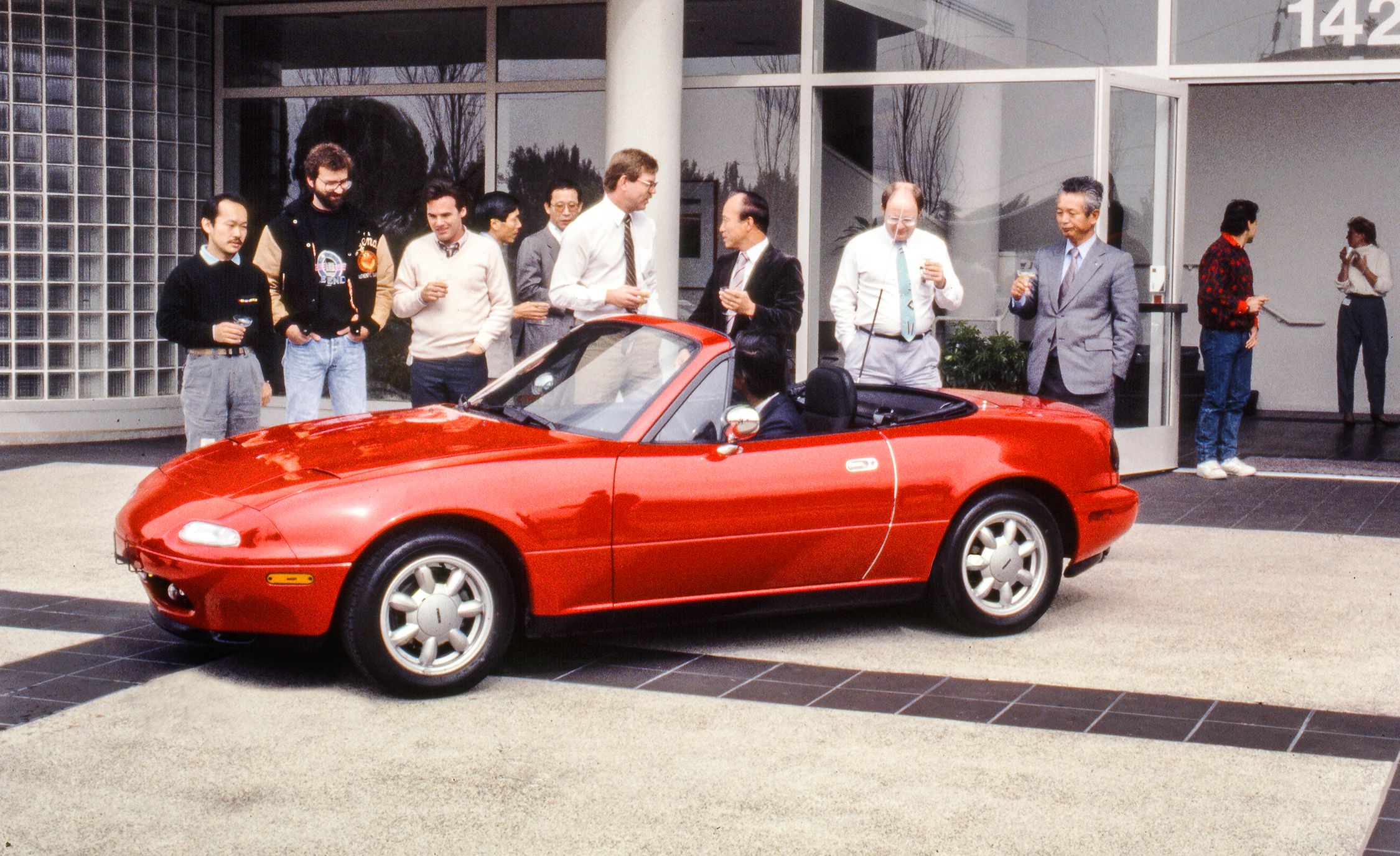
1989-mazda-mx-5-miata-1549038322

The 2023 Mazda MX-5 Miata is the latest in an exciting lineup of sporty performance vehicles that have captured hearts around the world. Here at Baglier Mazda, we’re dedicated to matching you with the vehicles we know you’ll love, which is why we’re excited to share a closer look at the history of the Mazda MX-Miata.

MAZDA MX-5 Miata: Early History

The Mazda MX-5 was first introduced in 1989, at a time when few sporty, affordable models were still available. It filled in a market gap where Triumph and FIAT models had once been, and where the still-available Alfa Romeo models were too costly. Demand for such a car was clear from the moment the Mazda MX-5 Miata hit the market. That first-generation car sold nearly a quarter of a million models in the United States alone, between 1989 and 1997.

The early Mazda MX-5 Miata won numerous awards, and several new models followed. The second-generation lasted from the 1999 model year to 2005, a vehicle that could go from zero to 60 in 6.7 seconds. The third-generation model was introduced in 2005 and produced until 2015.

MAZDA MX-5 Miata: Modern History

The current and fourth generation of the Mazda Miata MX-5 was first introduced in 2014, for the 2015 model year. It was updated for horsepower and design in 2019, and this generation has continued to win awards, including the Car of the Year Japan Award and a position on Car and Driver’s 10 Best List multiple years in a row.

Today, the 2023 Mazda MX-5 Miata is more popular than ever. It’s equipped with a 2.0-liter four-cylinder engine that produces up to 181 horsepower and 151 lb-ft of torque—more than enough power to make its ancestors proud.

Put the 2023 MAZDA MX-5 Miata to the Test

The 2023 Mazda MX-5 Miata is just one of the many exciting Mazda vehicles you’ll find here at Baglier Mazda. Join into a legacy of can’t beat cars with a drive at our dealership today.

Recommended Posts

5 Tips for Choosing the Right Vehicle

🚘 5 Tips for Choosing the Right Vehicle Helping customers in Northwestern Pa make smart, confident choices—every day. 🔍 Tip 1: Start with Your Lifestyle Think about what your day-to-day looks like. Are you commuting, carpooling, road-tripping, or hauling gear? Let your life determine your must-haves—from cargo space to tech features. 💰 Tip 2: Know Your True Budget The monthly payment is just one part of the equation. Be sure to factor in fuel, insurance, and maintenance. We’re happy to break down the numbers with you—no pressure. 🔁 Tip 3: Make the Most of Your Trade-In Your current vehicle may be worth more than you think. A solid trade-in value could open doors to new possibilities. 🌱 Tip 4: Consider Long-Term Efficiency From fuel economy to dependability, some vehicles simply go the distance. We’re happy to help you compare models for real-world reliability and total cost of ownership. 🤝 Tip 5: Choose the Right Team A great car is important—but so is a great dealership. Look for transparency, friendly support, and folks who treat you like a neighbor, not a number. That’s our philosophy at Baglier Buick GMC Mazda in Butler Pa 16001 📞 Have Questions? We're just a call or click away. Let’s make the process easy, together.

new vehicle lease depreciated value

Depreciation, Not a Bad Thing! Leasing Got You.

That's right, depreciating value is actually a good thing, maybe even a GREAT thing as it pertains to new vehicle leasing. The base payment is based on this value, crazy right? Why in the world would this be a GREAT thing you ask? Well, if we understand lease residual value then this would be the next part of the lease puzzle that we need to uncover. more It Is Puzzling! Depreciation, as it relates to new vehicles, has always been shared in this manner.. "New cars lose 20% when you drive them off the lot" or "When you sign your name on the dotted line" etc. Either way this is referring to the depreciated value at time of purchase, whatever percentage of depreciation you choose there is truth to it. Knowing the new vehicle depreciated lease value can come in very handy. So What Does It Mean? Actually its all in the phrase. Follow along, if the selling price of the new vehicle is $34,560 and the residual value is $22,809.60 this would leave the balance in between these numbers as the new vehicle lease depreciated value. The value today is $34,560 and the forecasted value in 33 months is $22,809.60 so the difference of the two is considered depreciation or the "Depreciated Value". Pretty simple actually. Well it will be once we uncover the "Capitalized Cost" of the new vehicle which will not be today. Okay, So Now What? What? This wasn't exciting enough for you? Yea, agreed, this is pretty Mundane information but to understand the basic leasing structure can be very helpful when discussing terms with your local car dealership. If you know the residual is based on 60% then that leaves the remaining 40% as depreciation? Far higher than the 20% from earlier. Would you want to own that car now? Not me, I'd rather borrow it for less then a few years and walk away.

clean new vehicle and energy tax credits

Clean New Vehicle and Energy Tax Credits

Clean New vehicle and Energy Tax Credits! $7,500 Tax Credit? Sign Me Up! Clean new vehicle and energy tax credits seems to be picking up steam. Lets take a moment and exhale. There is a road map to get there ( compliments of the IRS) but the hoops may be exhausting. The first place to start is your budget, will the deal make sense financially? You need to know your annual income structure to begin with. Referred to as "Modified Adjusted Gross Income" which is part of your AGI, here is the IRS definition of both. Here is the simpler version. Your modified adjusted gross income ( AGI) may not exceed: more $300,000 for married couples filing jointly $225,000 for heads of households $150,000 for all other filers Example ( courtesy of IRS) Adjusted Gross Income (AGI) =gross income–adjustments Gross Income =Total income. Income from all sources of income. Adjustments =Expenses the taxpayer paid for with income that the government deems should not be taxed. Bob’s Income: $50,000 salary/wages $12,000 in rental income $8,500 wages earned as a part-time Uber driver $500 from interest from bonds Gross Income=$71,000 Adjustments from his gross income: $250 in educator expenses $2,500 in student loan interest Adjustments=$2,750 Subtracting the Adjustments ($2750) from the Total Income ($71,000), Bob’s AGI is $68,250. So far So Good?.. Great Lets keep going! more Clean new vehicle and energy tax credits qualification First they need to meet the initial two "clean" criteria. The clean new vehicle and energy tax credits requirements will set the tone of vehicle choice in other words Make & Model. There are a total of two requirements that must be met to receive the $7,500 tax credit.  They both have a value of $3,750. Lucky for you they're listed below with the definition. Critical Mineral Requirement To meet the critical mineral requirement and be eligible for a $3,750 credit, the applicable percentage of the value of the critical minerals contained in the battery must be extracted or processed in the United States or a country with which the United States has a free trade agreement, or be recycled in North America. Read here for more information from the Treasury Dept. Battery Component Requirement To meet the battery component requirement and be eligible for a $3,750 credit, the applicable percentage of the value of the battery components must be manufactured or assembled in North America. Read here for more information from the Treasury Dept. If the vehicle you're deciding on fails to meet either of these requirements it will not qualify adversely if it qualifies for one (or the other) lets take a look at the additional requirements to qualify under the clean new vehicle and energy tax credits. Income ⇒ Battery ⇒ Minerals ⇒ Oh My! Now What? more There is always more but it will get easier or maybe less confusing, or not. We have covered the basics needed to make an informed decision so now lets go 3rd level and learn more about the clean new vehicle and energy tax credits. To qualify clean as a new vehicle and energy tax credits vehicle, it must: Have a battery capacity of at least 7 kilowatt hours Have a gross vehicle weight rating of less than 14,000 pounds Be made by a qualified manufacturer. FCVs do not need to be made by a qualified manufacturer to be eligible. See Rev. Proc. 2022-42 for more detailed guidance. Undergo final assembly here in North America Meet critical mineral and battery component requirements (as of April 18, 2023). The sale qualifies only if: You buy the vehicle new The seller reports required information to you at the time of sale and to the IRS. Sellers are required to report your name and taxpayer identification number to the IRS for you to be eligible to claim the credit. In addition, the vehicle's manufacturer suggested retail price (MSRP) can't exceed: $80,000 for vans, sport utility vehicles and pickup trucks $55,000 for other vehicles MSRP is the retail price of the automobile suggested by the manufacturer, including manufacturer installed options, accessories and trim but excluding destination fees. It isn't necessarily the price you pay. You can find your vehicle's weight, battery capacity, final assembly location (listed as “final assembly point”) and VIN on the vehicle's window sticker. The contents in this post is a collective of information found on the IRS website. It is recommended to advise a tax advisor and also review the IRS website under the heading Credits for new clean vehicles purchased in 2023 or after. Happy Shopping!

Call Us